top of page
All Posts


What Community-Based Prevention Can Look Like
Why Prevention Starts Long Before Problems Appear Prevention Is Often Invisible Until It Is Missing Many of the systems we rely upon are designed to respond after a problem has already emerged. Emergency services respond after a crisis. Healthcare often intervenes after symptoms appear. Organizations mobilize after concerns have become visible. Communities frequently focus resources on responding to challenges because immediate needs demand immediate action. Response will alw
Summer Willan
Jun 2515 min read


Building Stronger Partnerships Between Institutions and Communities
Strong communities are built through strong relationships. Discover how institutions and communities can work together to strengthen trust, improve engagement, support public safety, and create healthier, more resilient communities through meaningful partnerships.
Summer Willan
Jun 2114 min read


What Makes Communities More Resilient During Difficult Times
Understanding Community Resilience Resilience Is More Than Simply Bouncing Back Communities face challenges of every kind. Natural disasters. Economic uncertainty. Public health emergencies. Social tensions. Political divisions. Unexpected tragedies. Periods of rapid change. No community is immune from hardship. The question is not whether communities will face difficult times. The question is how they respond when those moments arrive. This is where resilience becomes import
Summer Willan
Jun 1515 min read


Why Community Belonging Matters More Than We Think
Why Belonging Is Often Overlooked Belonging Is One of the Most Important Community Resources We Rarely Discuss When communities discuss important challenges, conversations often focus on visible issues. Housing. Crime. Mental health. Education. Healthcare. Economic development. Public safety. These topics matter because they influence people's daily lives in significant ways. Yet beneath many of these conversations lies something less visible but equally important: Belonging.
Summer Willan
Jun 915 min read


Strong Communities Share Responsibility for Safety
Why We Often Define Safety Too Narrowly When people talk about community safety, the conversation often begins with emergencies. A crime occurs. A crisis unfolds. Someone calls for help. Emergency services respond. These systems are essential. Communities need police officers, firefighters, paramedics, and other professionals who can act quickly when situations become dangerous. Their role remains critically important. The challenge is not that emergency response matters too
Summer Willan
Jun 311 min read


Why Prevention Requires Cross-Sector Collaboration: Moving Beyond Silos Toward Shared Solutions
Why Complex Problems Rarely Have Single-Agency Solutions Many of the challenges facing communities today are often discussed as though they belong to a single organization, department, or sector. Mental health is often viewed as a healthcare issue. School disengagement is often viewed as an education issue. Community safety is often viewed as a public safety issue. Homelessness is often viewed as a housing issue. Substance use is often viewed as a healthcare issue. Social iso
Summer Willan
Jun 16 min read


Why Psychological Safety Matters in Group Conversations
Why People Often Stay Quiet in Group Settings Not every silence in a group means agreement. Sometimes silence reflects uncertainty. Sometimes it reflects fear, discomfort, emotional exhaustion, distrust, embarrassment, or concern about how speaking honestly might affect relationships, reputation, employment, belonging, or emotional safety. Many people have experienced situations where speaking openly led to: ridicule dismissal conflict punishment humiliation exclusion emotion
Summer Willan
May 218 min read


Why Cultural Safety Matters in Community Conversations
Why Some People Feel Unsafe in Conversations Others Consider “Normal” Not every conversation feels the same to every person in the room. A discussion that feels ordinary, productive, or emotionally neutral to one individual may feel uncomfortable, emotionally exhausting, or unsafe to someone else depending on their experiences, history, identity, or relationship with institutions and community systems. This difference is often overlooked. People sometimes assume that if no ha
Summer Willan
May 1811 min read


What Respectful Dialogue Looks Like in Difficult Conversations
Why Difficult Conversations Often Break Down Some conversations feel difficult before they even begin. People enter them carrying frustration, stress, fear, disappointment, defensiveness, or emotional exhaustion. Sometimes trust has already been damaged. Sometimes previous conversations ended badly. Sometimes people feel unheard long before the current discussion even starts. In emotionally charged situations, communication can deteriorate quickly. Voices become sharper. Inte
Summer Willan
May 149 min read


The Role of Listening in De-Escalation and Public Trust
Why Listening Is Often Undervalued Listening sounds simple. Most people assume they already know how to do it. Conversations happen every day at work, at home, in leadership settings, in schools, during conflict, and across communities. Because communication is such a common part of daily life, listening is often treated as automatic rather than intentional. But genuine listening is much more difficult than many people realize. In emotionally charged situations, people often
Summer Willan
May 138 min read


Why Accountability Builds Trust Instead of Weakening Authority
Why Accountability Is Often Misunderstood Conversations about accountability can become emotionally charged very quickly. In public discussions, accountability is often framed as punishment, criticism, or loss of authority. Some people hear the word and immediately associate it with blame, discipline, public embarrassment, or institutional failure. Others view accountability as something that only becomes important after a serious mistake or crisis has already occurred. But a
Summer Willan
May 128 min read


Why Community Safety Needs More Than Emergency Response
Why Safety Conversations Often Start Too Late When communities talk about safety, the conversation often begins after something has already gone wrong. A violent incident occurs. Someone experiences a mental health crisis. A conflict escalates. Emergency vehicles arrive. Headlines appear. Public concern rises. Leaders feel pressure to respond quickly. People want reassurance that action is being taken. Emergency response systems play a vital role in society. Police officers,
Summer Willan
May 79 min read


Why Conversations Break Down (Even When People Mean Well)
When Good Intentions Aren’t Enough Most people do not enter conversations looking for conflict. They are trying to explain something. To be understood. To solve a problem. To connect. And yet, many conversations still break down. Voices get sharper. People interrupt. Assumptions are made. And what started as a simple exchange becomes something tense, frustrating, or even damaging. This does not usually happen because people are bad communicators or because they do not care. I
Summer Willan
May 64 min read


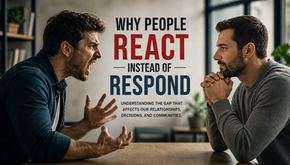
Why People React Instead of Respond
The Moment Everything Happens Fast It happens quickly. A comment is made. A tone shifts. A situation feels tense. And before someone has time to think, they react. Words come out sharper than intended. Decisions are made too quickly. Emotions take over. Only later—sometimes minutes, sometimes hours, sometimes days—does reflection begin. “I wish I handled that differently.” This pattern is incredibly common. And it is not because people lack intelligence or intention. It is be
Summer Willan
May 16 min read


Why Hurt People Struggle to Trust Others
When Trust Starts to Feel Unsafe For some people, trust comes naturally. For others, it feels difficult. Not because they want it to be that way—but because of what they have experienced. Trust is not just built on logic. It is built on experience. And when someone has been hurt, disappointed, ignored, or let down, their relationship with trust can change. They may become more cautious. More guarded. More hesitant to open up. From the outside, it can look like distance. But u
Summer Willan
Apr 304 min read


Why People Struggle to Sit With Their Own Thoughts
Why Control Often Fails When communities are struggling, leaders often feel pressure to respond quickly. People want answers. They want to feel safe. They want to believe someone is in charge. In those moments, it can be tempting for leaders, institutions, and systems to rely on control. More rules. More restrictions. More punishment. More authority. Control can create the appearance of order in the short term. People may comply because they are afraid of consequences. But fe
Summer Willan
Apr 294 min read


Why Rest Feels So Hard for So Many
Many people know they are tired. They know they need a break. They know they are overwhelmed. But even when they finally have a chance to rest, they often struggle to enjoy it. Instead of feeling relaxed, they feel guilty. They think about all the things they should be doing. They worry they are wasting time. They feel pressure to stay productive. For many people, rest no longer feels natural. It feels like something that must be earned. This has become incredibly common in m
Summer Willan
Apr 155 min read


The Importance of Quiet: Why Constant Noise Is Hurting Our Wellbeing
Why So Many People Feel Mentally Exhausted For many people, life never really feels quiet anymore. Phones buzz constantly. News alerts appear all day long. Social media never stops. Work follows people home. Televisions play in the background. People move from one task to another without ever slowing down long enough to think, breathe, or rest. Even when people are physically alone, they are often still surrounded by noise. The mind rarely gets a chance to settle. Over time,
Summer Willan
Apr 144 min read


Why Communities Need Trust More Than Control
Why Control Often Fails When communities are struggling, leaders often feel pressure to respond quickly. People want answers. They want to feel safe. They want to believe someone is in charge. In those moments, it can be tempting for leaders, institutions, and systems to rely on control. More rules. More restrictions. More punishment. More authority. Control can create the appearance of order in the short term. People may comply because they are afraid of consequences. But fe
Summer Willan
Apr 134 min read


Why Some People No Longer Trust Institutions
When Trust Begins to Break Down Trust is one of the most important parts of any healthy society. People need to believe that the institutions around them are acting fairly, honestly, and in the public’s best interest. Whether it is government, policing, healthcare, education, media, or community organizations, trust is what allows people to feel safe, supported, and connected. But for many people, that trust has weakened. Across many communities, there is a growing feeling th
Summer Willan
Apr 95 min read


The Emotional Toll of Always Being “On Guard”
The Weight of Constant Vigilance There are people who move through the world with their guard up all the time. Sometimes it comes from past trauma. Sometimes it comes from years of working in high-pressure environments. Sometimes it develops slowly after repeated disappointments, betrayals, conflict, or exposure to crisis. Over time, being alert can stop feeling like a temporary response and start feeling like a permanent way of life. People who are always “on guard” often be
Summer Willan
Apr 75 min read


How Media Shapes Public Perceptions of Safety
People often decide how safe they feel based on what they see, hear, and read every day. For many people, the media plays a major role in shaping that perception. Television news, social media posts, crime alerts, viral videos, podcasts, and endless scrolling can create the feeling that danger is everywhere. A single violent incident can dominate headlines for days. A video clip from another city can spread across the internet in hours. Repeated exposure to stories about crim
Summer Willan
Apr 26 min read


The Difference Between Being Respected and Being Feared
Why Respect and Fear Are Often Confused People often assume that fear and respect are closely connected. In many workplaces, institutions, families, and public safety environments, people sometimes believe that if others are afraid of consequences, authority, or punishment, they will behave better. Fear can create quick reactions. It can make people follow directions, stay quiet, or avoid confrontation. Because of that, fear can sometimes look effective in the short term. A l
Summer
Apr 17 min read


Why Public Trust Takes Years to Build and Seconds to Lose
Why Public Trust Is So Fragile Trust is one of the most important foundations of any relationship. It shapes how people feel, how they respond, and whether they are willing to cooperate in difficult moments. In communities, trust affects how people interact with schools, healthcare systems, governments, courts, and public safety institutions. When it comes to policing, trust matters even more. Police officers are given unique authority. They are trusted to make decisions in d
Summer
Mar 316 min read
bottom of page